Creativity: Do you think you can do it?

[Photo credit: Hiep hong/Pixabay]

It is a critical, yet overlooked, topic in creativity.  It may plague people in their everyday creative lives as well as those famous people that we quickly associate with ground-breaking talents. 

Creative self-efficacy (CSE): one’s belief in being able to do something creative. 

Maybe it’s painting, writing, or computer graphics…and maybe it’s something that has dissipated with time. 

Yet inevitably CSE is present, though not pervasive in creative endeavors.  My own CSE is higher in writing a blog than it would be, for instance, designing a new house. 

The backdrop to CSE is mindset, the overall perception toward creative action.  A fixed mindset is one where a person believes, “I was born with these talents, and they can’t be changed.”  On the other hand, a growth mindset is grounded in, “My abilities can be enhanced through practice and effort.” 

It is, of course, the growth mindset—the thinking that creativity can be learned via effort—that is beneficial in creative pursuits.  This mental approach also aids in CSE. 

As Pringle pointed out in her book, The Creativity Choice: The Science of Making Decisions to Turn Ideas into Action, “…greater creative self-efficacy makes choosing creativity easier, enhances creative thinking, and ultimately helps translate creative work into real achievements.” 

As she reminds readers, CSE is not an all-or-none proposition.  People can differ in their self-belief depending on the context and the creative task at hand.  On top of that, CSE can fluctuate over time, even on a specific endeavor.  After all, doubts are normal, even for the most famous of professionals in creativity and innovation.

Consider the classic children’s tale, The Little Engine that Could, originally published in 1930.  The little blue engine that succeeded in crossing the mountain wasn’t the first choice of the dolls and toys.  They asked other trains first.  The successful blue engine was merely used for switching trains, not for carrying large loads over steep terrain.  It didn’t automatically think, “Of course I can” when asked about the mission. 

Pringle added more to the CSE lesson in writing about that engine.  “Instead, it showed a desire for growth…It starts from a lack of conviction, begins trying, and finally comes to realize it is able, after successfully accomplishing something new and difficult.”      

That engine chugs on, 96 years later, serving as a lesson to many.

References:

Piper, W. (2005). The little engine that could. The Penguin Group.    

Pringle, Z. I. (2025). The creativity choice: The science of making decisions to turn ideas into action.  PublicAffairs.
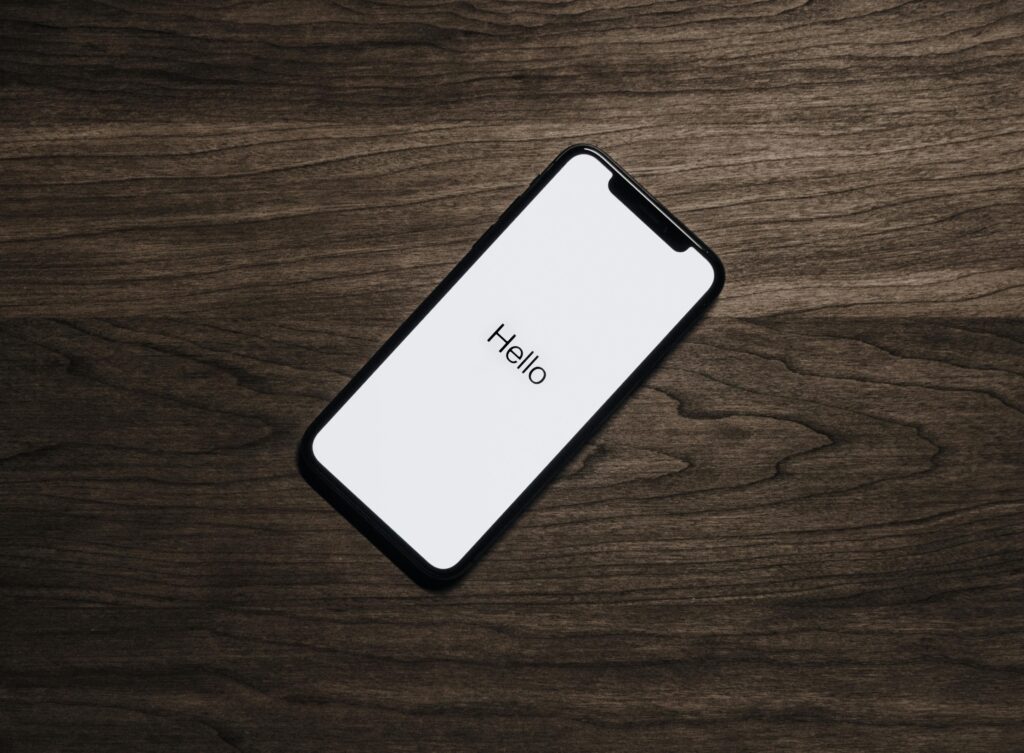
If you call my college roommate…

[Photo credit: Tyler Lastovich/Pexels]

I frequently think of my St. Bonaventure University roommate and treasured friend with a loving chuckle, given his magnetic personality. 

In college he was able to recite every New York State county alphabetically in under 60 seconds.  He performed “Rappers Delight” at a campus-wide talent show and got a standing ovation.  At his high school prom, people ceded the dance floor to watch him dance.

Yes, he has rhythm as well as magnificent quirkiness that leaves people smiling.

Fast-forward several years. That lanky redhead became Dr. Edward Downes, now an Associate Professor in the College of Communication at Boston University who is a modern-day advocate for limited cell phone use.    

His uniqueness still vibrant, Downes has had a firm belief: Yes, own a cell phone, but don’t let your cell phone own you. 

He has rarely carried or owned a mobile device since they became mainstream in the late 1990s.  Downes uses one in 2026 “very, very sparingly” and only in times when it is required in, for instance, logging on to his university account.  He will seldom use a cell phone to make or receive a call.     

Others initially scoffed at his approach to technology.  My wife was one of them, saying, “A communications professor not having a cell phone…it doesn’t make sense.” 

However, reactions to Downes’ cell phone avoidance are shifting.  While others would give him a confused look 15 years ago, he now hears comments like, “Oh, I love that.  I wish I didn’t have mine,” and “I want to hug you for not having one.” 

People have come to resonate with his disdain for “these unwanted guests.” 

“I get very little pushback from audiences because they know that there’s something going on with these things that they don’t like.  They don’t have a solution on what to do,” he said.   

He has used an analogy for several years: Consider a 100-yard football field as a history of human communication.  A single blade of glass represents the amount of time that mobile phones have been a part of that history.  “The main thing we don’t get is that the mobile phone, spread across the world, has no control group to monitor what’s going on,” he said.  “We don’t know anything about the long-term effects of it.” 

At the same time, he maintains, “Smart phones are altering our essence,” redefining time, space, and availability as well as personal identity. 

Research adds other considerations, such as mental and physical health.  A recent study found that owning a mobile phone before age 12 increased the risks of obesity, depression, and lack of proper sleep compared to those not having one. 

New York City Public Schools became the largest school district in the nation to prohibit cell phones usage during the school day.  South Korea is banning the use of cell phones in elementary and middle schools starting this year. 

Some college students are following suit. Seán Killingsworth, a former University of Central Florida student, started the Reconnect Movement to promote phone-free clubs at various campuses. 

The mayor of Toyoake, a Japanese city of about 68,000, recently instituted an ordinance limiting the use of cell phones to two hours per day outside of work and school.  It was approved by the city assembly after a 12-7 vote.    

The mere presence of a cell phone can be distracting.  A 2018 study from the University of British Columbia found that keeping a personal device on the table during a meal increased distraction and lessened enjoyment of being with the friend or family member.  The lead author, Elizabeth Dunn, said, “This study tells us that, if you really need your phone, it’s not going to kill you to use it. But there is a real and detectable benefit from putting your phone away when you’re spending time with friends and family.”

What about not having one at all?  Well, maybe it’s not that bad.

Colleen Kinder, a Yale Summer Session instructor who has taught a study-abroad writing course in France since 2014, asked students to give up their cell phones for the month, certainly not an easy task.  One student that had a smartphone since grade school said, “I was always trying to finish work as quickly as possible so I could get back to my phone.” 

And her students thrived without the internet.  What happened, in Kinder’s words, was “Ping-Pong, knitting, charades, climbing hay bales, letter writing, stargazing, sitting through two-hour dinners with nary a device on the table.”  They used paper maps to navigate France.  They slept better, and “Like the kids they still are, they played.”

In his conversations with others, including students and colleagues, Downes finds that about 90 percent are frequently overloaded with information.  His phone-free life is devoid of such anxiety, something for which he is grateful.

He freely admits that he doesn’t have all of the answers.  He is simply posing the question, “Are we thinking about these issues beyond our need to use them?”

Call him with any ideas.  Just be sure to use his landline.     

Laughter from China to Japan

[Photo credit: Tumisu/Pixabay]

Maybe laughter is the best medicine. 

Norman Cousins, a best-selling author who espoused the importance of emotions in health, was one of them.

His self-prescribed spontaneous humor sessions offered a powerful anesthetic effect that helped with arthritis in his spine.  “I made the joyous discovery that 10 minutes of genuine belly laughter…would give me at least two hours of pain-free sleep,” he wrote in 1976.   

Subsequent research has associated laughter and humor with a host of benefits, including higher pain tolerance and overall well-being.  A 2023 meta-analysis found that a laughter intervention was related to a significant reduction in cortisol, the “stress hormone” made by the adrenal glands.

The research extends beyond North America.  In a recent global survey, about 73 percent of participants indicated that they smiled/laughed during much of the previous day. 

And, while comedy bars dot most US cities, the concept of purposeful places of laughter are also found in Japan and China.  Both places are seeing a surge in stand-up comedy. According to the China Association of Performing Arts, ticket sales for comedy shows there jumped 135 percent in 2025. 

The comedy theme in places such Beijing and Shanghai is stress.  Well, at least stress relief.  Young comics delve into topics such as unemployment, the property crisis, and parenting with a humorous lens.    

Whether it is the economy or parenting, “stand-up can offer the comfort of knowing others are experiencing similar struggles,” according to Sarah Wu in The Economist

Stand-up has made comedians out of unlikely candidates from food delivery drivers to flight attendants.  While many comedians tend to be young adults, one rural 50-year-old woman found stand-up success in talking about her journey of exiting a challenging marriage.  “A stressed-out society,” Wu wrote, “is finding humour, and solace, in their shared hopes and frustrations.”       

Meanwhile, curiosity is drawing crowds to a Tokyo stand-up bar, opened in April 2022 by a British expat fluent in Japanese.  Most audience members are tourists coming to hear stand-up comedy in English. 

“If you’re on vacation in Tokyo, you’ve done karaoke…you’ve done everything, so you’re like, ‘Now what can we do tonight?’” Katharine Rowan, Operations Manager of the Tokyo Comedy Bar, told me.   

“Nobody thinks to go to Tokyo to see comedy,” she admitted.  Rowan also believes that social media has played a role in the recent upsurge in stand-up popularity. 

Customer expectations may be lower upon entry, but Rowan said that people generally exit being impressed. “We don’t want people to leave saying, ‘Well, that was pretty good for Japan.’  We want people to leave saying, ‘That was pretty good.’”   

Stand-up comedy has been around in Japan for about 15 years, living in the shadows of restaurants and bars without a dedicated space. The Tokyo bar addressed that deficiency, offering 15-20 shows per week by an array of 75 stand-ups, many of whom are from the West. The gig is part-time for most comics, as Rowan estimated that 90 percent have daytime positions. 

The bar has also attracted notable comedians.  Atsuko Okatsuka, a US comedian who spent part of her childhood in Japan, and Melissa Villaseñor, a former “Saturday Night Live” cast member, took the stage at the bar in the past year.

A common mistake for some stand-ups visiting Japan is incorrectly assuming that their material will resonate with audiences.  A bit about politics in the US, for instance, won’t necessarily land with customers from Mumbai or Hong Kong. 

“Because our audience is mostly tourists, we found that they are more interested in hearing about stuff about Japan,” Rowan said. “A lot of the material our comedians do is talking about the lighter side of Japan,” such as the absence of public garbage cans, crowded trains, and washlet toilets.    

Rowan envisions a continued interest in stand-up in the future.  “I think you’ll definitely see more Japanese stand-up than English,” she said.  Those “poorly attended” shows in Japanese from years ago are “now sold out every single week.” 

“I think the general Japanese public is starting to recognize stand-up as a form of comedy,” she said, “whereas before there was just no knowledge of it.” 

Whether Tokyo or Tallahassee, Beijing or Boston, people want to laugh.  Norman Cousins would be smiling at the thought. 

References

Cousins N. (1976). Anatomy of an illness (as perceived by the patient). New England Journal of Medicine, 295(26), 1458–63. https://doi.org/10.1056/NEJM197612232952605 PMID: 995143

Gallup/World Health Summit. (2025). State of the World’s Emotional Health 2025.  Author.

Kramer C.K., & Leitao C.B. (2023). Laughter as medicine: A systematic review and meta-analysis of interventional studies evaluating the impact of spontaneous laughter on cortisol levels. PLoS ONE, 18(5), e0286260. https://doi.org/10.1371/journal.pone.0286260

Wu, S. (2025, Nov 15-21). Funny ha-ha. The Economist, pp. 48-49.

The “R” in alarm clock sleeping

Photo credit: PIRO/Pixabay

The acronym SCAMPER has been used for decades to generate creative ideas. 

The last letter, “R,” takes reversing the order of something that commonly occurs as a way to develop something new.  Examples include placing the trunk of a car in the front, not the rear, of the vehicle as well as a restaurant that serves dessert at the beginning of the meal.  (Such a place must exist somewhere?) 

I recently read about an “R” example of wellness in a BBC article. 

Eric Verdin, MD, and president and chief executive of the Buck Institute for Research on Aging, is a physician specializing in the aging process and related diseases.  In his work, he knows about the importance of sleep, particularly as people get older. 

Yes, genes can affect sleep patterns, as can factors such as work schedules, lighting, and internet use.  Social jet lag takes place when an individual’s internal clocks become mis-synced with their social clock, which is frequently controlled by external influences of daily life (Straub, 2023).

Many articles about sleep hygiene suggest going to bed at the same time each evening. 

“The reason for this is we’re circadian beings,” Dr. Verdin said in a recent BBC article. “Our whole biology, from gene expression to metabolism is in synchrony with the 24-hour cycle, and so I tell people, going to bed at the same time each day helps your body to stay really well synchronised to all of this.”

However, translating that idea into reality can be difficult.  Too many outside obstacles can interfere.  

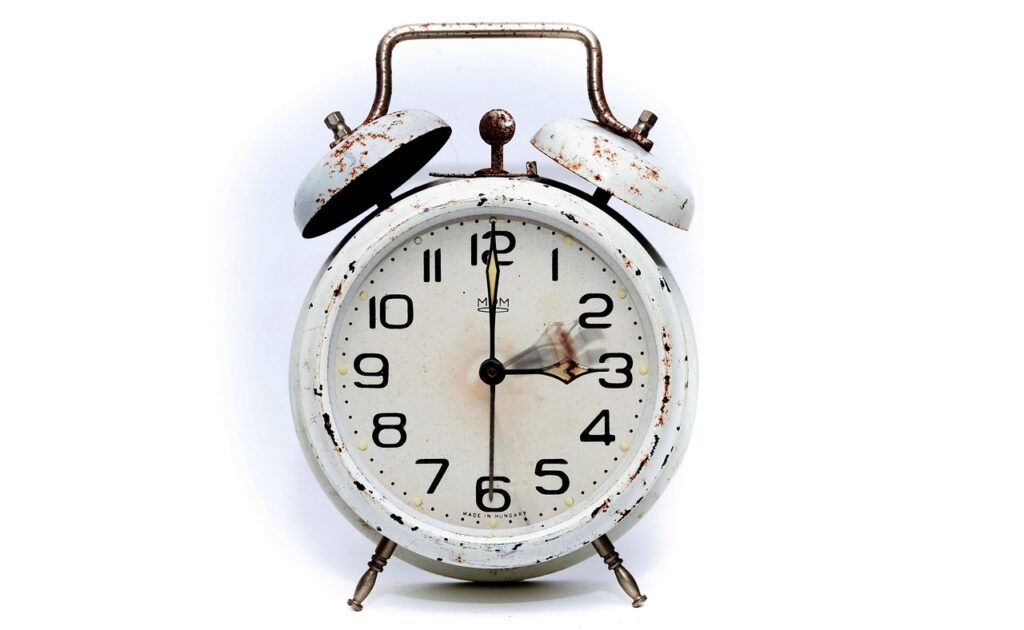
Enter the creative “R” idea from Dr. Verdin.  Instead of considering an alarm clock for waking up, use it for going to bed instead.  That is, set the alarm as an audible mark for preparing to sleep. 

“The idea came front the fact that I wanted to be able to wake up when my body was ready, not when the alarm rang,” Dr. Verdin told me via email.  “I worked on finding out how many hours I needed by setting an alarm in the evening at different times, going to bed, and finding out when I woke up.” 

He eventually decided on a 10pm alarm with a sleeptime around 10:30pm and then waking up spontaneously around 6am.

This alarm clock reminder is an excellent example of reverse ideation…. and probably healthier than eating dessert first.

References:

Cox, D. (2025, November 19). Things you can do in your 30s to improve your health in your 70s.  BBC.comhttps://www.bbc.com/future/article/20251118-things-you-can-do-in-your-30s-to-improve-your-health-in-your-70s

Straub, R.O. (2023). Health psychology: A biopsychosocial approach (seventh ed.). Worth Publishers.

Wellness idea for the Day: Sleeping better?

I wanted to pass along an idea that came from Sanjay Gupta’s recent (2025) book, It Doesn’t Have to Hurt. Though the book is about pain, it also offers an overview of many wellness topics, including sleep, movement, and nutrition.

Dr. Gupta discussed being a “world-class sleeper,” but admits that this hasn’t always been the case.

His tip? Keeping a notepad by the side of the bed and jotting down items from your day and plans for tomorrow. The idea is designed to alleviate all of those things from the day that interferes with falling asleep. In his words, “The simple act of writing them down–not typing them on my phone but physically writing–allowed me to outsource them from my brain to the paper.”

One thing that he added: “And every person I’ve recommended this to has thanked me, even my teenage daughters!”

Giving a hand to creativity and innovation

[Photo credit: ajcespedes/Pixabay]

A football quarterback gets paid for “handing off” the ball.  We “give a hand” to show appreciation at an event. “Hands up” is common when seeking volunteers.  Old clothes may become “hand-me-downs.”   Needing help equals “give me a hand.”  Don’t touch means “hands off.”  A bank robber’s go-to lines are “hands up” and “hand it over.”

“Hand-y” references are plentiful in the English language. 

To fully appreciate the beauty of hands, it might be helpful to know some facts.  First, each hand consists of 29 joints, 123 ligaments, and 27 bones (not including the sesamoid bone that can vary in number to each person).  The tips of fingers are vital to the sensations of pressure, pain, and temperature and are critical in transmitting information to the brain to operate in the world.  Fingers don’t even have muscles. In essence, they are “pseudo puppets” that are moved by muscles in bottom of the hand and arm. 

Technically thumbs are not fingers, though the digit is extremely important.  About half of the hand functioning is due to thumbs, which in fact does have nine muscles in all.

I have recently become intrigued with the “hands-on” aspect of creativity.  I remember a visit to a visit to a museum in Santiago, Chile.  Artifacts dating back hundreds of years reflected creative thinking and innovation in clothing, art, and household goods. I marveled at the ideas.  Just how did people living in the 1100s, for instance, devise these items that added innovation to their cultures?

To go back even further, a handprint was recently found in an Egyptian clay dating back about 4000 years.  

This finding along with my museum visit brought a deepened appreciation of the importance of hands in turning creative ideas into tangible products.  Ideas start in our brains, yet it is the hands that frequently implement them. (Note: I do not mean to imply that hands are essential in creativity.  They aren’t.)   As Jacob Bronkowski said, “The hand is the cutting edge of the mind.”

Ever since Greek times, the hand has been seen as having creative powers.  With its agility and tactility, it can move, change, and create things.  In addition, consider the importance of hand gestures in non-verbal communication.  Simply watch a soccer match or basketball game to see how quickly messages can be sent by hand. 

Hands have truly helped humans adapt to the world, having offered people an openness to the world for millenia.  In the words of Gebauer, “…we construct a world starting with our hands, an incorporated and manipulated world.”

I sought the insight of a hand surgeon, who also echoed these points.

“The hand is a unique organ that allows us to intimately interact with our environment to create art, harvest the field, communicate with sign language, hold hands. or to caress a loved one,” said Dr. Robert Goitz, Chief of the Division of Hand, Upper Extremity and Microsurgery in the Department of Orthopaedic Surgery at the University of Pittsburgh School of Medicine. 

“The hand can effectively allow us to interact with our environment with speed, force, and sensitivity that have allowed humans to creatively evolve above all other animals,” he told me.

This body part deserves recognition in the world of innovation.  After all, the future is in our hands.     

References:

BBC. (2025, July 28). Rare 4,000-year-old Egyptian handprint found. https://www.bbc.com/news/articles/cpqvzevep2eo

Gebauer, G. (2019) The creativity of the hand.  Journal of Aesthetics and Phenomenology, 6(2), 185-193, DOI: 10.1080/20539320.2019.1672308

Lloyd, J., & Mitchinson, J. (2008). If ignorance is bliss, why aren’t there more happy people?  Smart quotes for dumb times.  Harmony Books.

University Orthopaedic Associates. (n.d.).  5 incredible things you didn’t know about your hands.  https://uoanj.com/5-incredible-things-you-didnt-know-about-your-hands/