Laughter from China to Japan

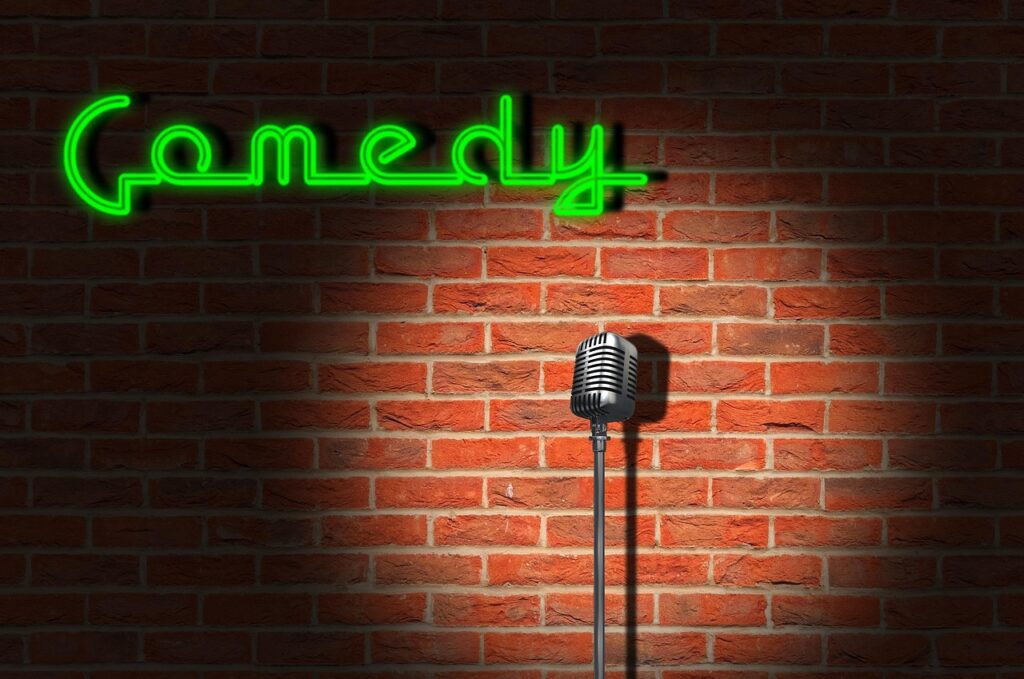
[Photo credit: Tumisu/Pixabay]

Maybe laughter is the best medicine. 

Norman Cousins, a best-selling author who espoused the importance of emotions in health, was one of them.

His self-prescribed spontaneous humor sessions offered a powerful anesthetic effect that helped with arthritis in his spine.  “I made the joyous discovery that 10 minutes of genuine belly laughter…would give me at least two hours of pain-free sleep,” he wrote in 1976.   

Subsequent research has associated laughter and humor with a host of benefits, including higher pain tolerance and overall well-being.  A 2023 meta-analysis found that a laughter intervention was related to a significant reduction in cortisol, the “stress hormone” made by the adrenal glands.

The research extends beyond North America.  In a recent global survey, about 73 percent of participants indicated that they smiled/laughed during much of the previous day. 

And, while comedy bars dot most US cities, the concept of purposeful places of laughter are also found in Japan and China.  Both places are seeing a surge in stand-up comedy. According to the China Association of Performing Arts, ticket sales for comedy shows there jumped 135 percent in 2025. 

The comedy theme in places such Beijing and Shanghai is stress.  Well, at least stress relief.  Young comics delve into topics such as unemployment, the property crisis, and parenting with a humorous lens.    

Whether it is the economy or parenting, “stand-up can offer the comfort of knowing others are experiencing similar struggles,” according to Sarah Wu in The Economist

Stand-up has made comedians out of unlikely candidates from food delivery drivers to flight attendants.  While many comedians tend to be young adults, one rural 50-year-old woman found stand-up success in talking about her journey of exiting a challenging marriage.  “A stressed-out society,” Wu wrote, “is finding humour, and solace, in their shared hopes and frustrations.”       

Meanwhile, curiosity is drawing crowds to a Tokyo stand-up bar, opened in April 2022 by a British expat fluent in Japanese.  Most audience members are tourists coming to hear stand-up comedy in English. 

“If you’re on vacation in Tokyo, you’ve done karaoke…you’ve done everything, so you’re like, ‘Now what can we do tonight?’” Katharine Rowan, Operations Manager of the Tokyo Comedy Bar, told me.   

“Nobody thinks to go to Tokyo to see comedy,” she admitted.  Rowan also believes that social media has played a role in the recent upsurge in stand-up popularity. 

Customer expectations may be lower upon entry, but Rowan said that people generally exit being impressed. “We don’t want people to leave saying, ‘Well, that was pretty good for Japan.’  We want people to leave saying, ‘That was pretty good.’”   

Stand-up comedy has been around in Japan for about 15 years, living in the shadows of restaurants and bars without a dedicated space. The Tokyo bar addressed that deficiency, offering 15-20 shows per week by an array of 75 stand-ups, many of whom are from the West. The gig is part-time for most comics, as Rowan estimated that 90 percent have daytime positions. 

The bar has also attracted notable comedians.  Atsuko Okatsuka, a US comedian who spent part of her childhood in Japan, and Melissa Villaseñor, a former “Saturday Night Live” cast member, took the stage at the bar in the past year.

A common mistake for some stand-ups visiting Japan is incorrectly assuming that their material will resonate with audiences.  A bit about politics in the US, for instance, won’t necessarily land with customers from Mumbai or Hong Kong. 

“Because our audience is mostly tourists, we found that they are more interested in hearing about stuff about Japan,” Rowan said. “A lot of the material our comedians do is talking about the lighter side of Japan,” such as the absence of public garbage cans, crowded trains, and washlet toilets.    

Rowan envisions a continued interest in stand-up in the future.  “I think you’ll definitely see more Japanese stand-up than English,” she said.  Those “poorly attended” shows in Japanese from years ago are “now sold out every single week.” 

“I think the general Japanese public is starting to recognize stand-up as a form of comedy,” she said, “whereas before there was just no knowledge of it.” 

Whether Tokyo or Tallahassee, Beijing or Boston, people want to laugh.  Norman Cousins would be smiling at the thought. 

References

Cousins N. (1976). Anatomy of an illness (as perceived by the patient). New England Journal of Medicine, 295(26), 1458–63. https://doi.org/10.1056/NEJM197612232952605 PMID: 995143

Gallup/World Health Summit. (2025). State of the World’s Emotional Health 2025.  Author.

Kramer C.K., & Leitao C.B. (2023). Laughter as medicine: A systematic review and meta-analysis of interventional studies evaluating the impact of spontaneous laughter on cortisol levels. PLoS ONE, 18(5), e0286260. https://doi.org/10.1371/journal.pone.0286260

Wu, S. (2025, Nov 15-21). Funny ha-ha. The Economist, pp. 48-49.

Wellness idea for the Day: Sleeping better?

I wanted to pass along an idea that came from Sanjay Gupta’s recent (2025) book, It Doesn’t Have to Hurt. Though the book is about pain, it also offers an overview of many wellness topics, including sleep, movement, and nutrition.

Dr. Gupta discussed being a “world-class sleeper,” but admits that this hasn’t always been the case.

His tip? Keeping a notepad by the side of the bed and jotting down items from your day and plans for tomorrow. The idea is designed to alleviate all of those things from the day that interferes with falling asleep. In his words, “The simple act of writing them down–not typing them on my phone but physically writing–allowed me to outsource them from my brain to the paper.”

One thing that he added: “And every person I’ve recommended this to has thanked me, even my teenage daughters!”

Giving a hand to creativity and innovation

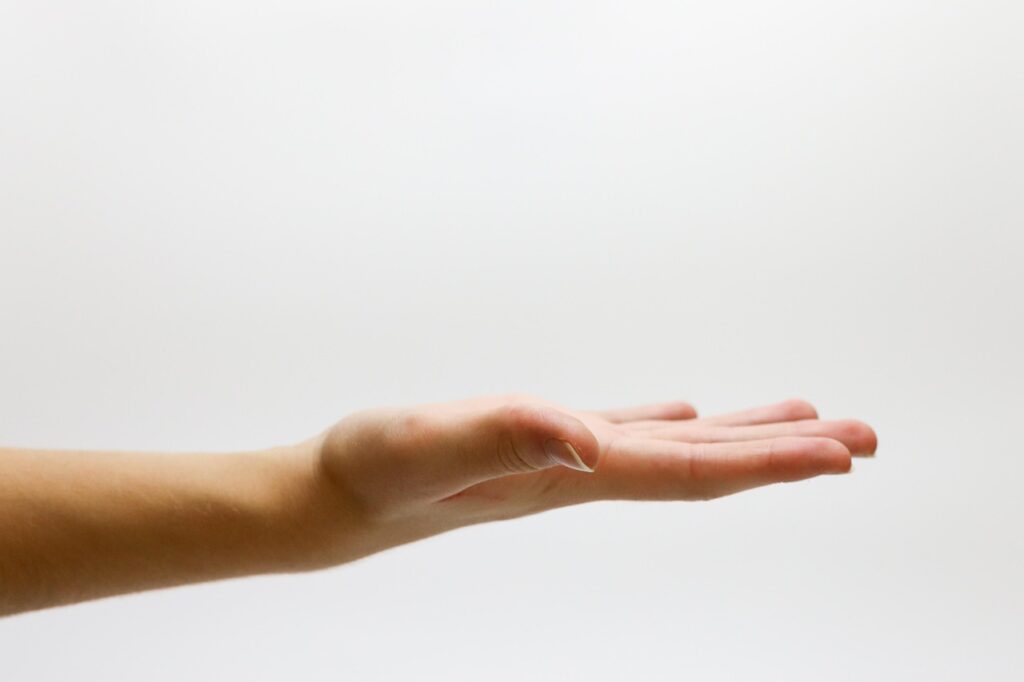
[Photo credit: ajcespedes/Pixabay]

A football quarterback gets paid for “handing off” the ball.  We “give a hand” to show appreciation at an event. “Hands up” is common when seeking volunteers.  Old clothes may become “hand-me-downs.”   Needing help equals “give me a hand.”  Don’t touch means “hands off.”  A bank robber’s go-to lines are “hands up” and “hand it over.”

“Hand-y” references are plentiful in the English language. 

To fully appreciate the beauty of hands, it might be helpful to know some facts.  First, each hand consists of 29 joints, 123 ligaments, and 27 bones (not including the sesamoid bone that can vary in number to each person).  The tips of fingers are vital to the sensations of pressure, pain, and temperature and are critical in transmitting information to the brain to operate in the world.  Fingers don’t even have muscles. In essence, they are “pseudo puppets” that are moved by muscles in bottom of the hand and arm. 

Technically thumbs are not fingers, though the digit is extremely important.  About half of the hand functioning is due to thumbs, which in fact does have nine muscles in all.

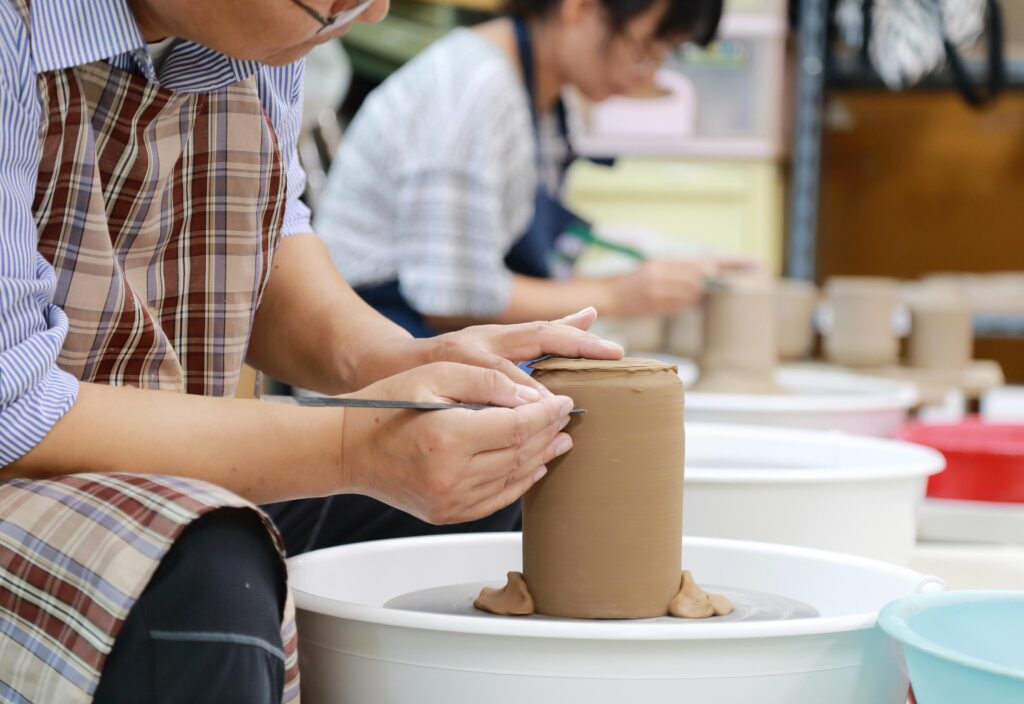
I have recently become intrigued with the “hands-on” aspect of creativity.  I remember a visit to a visit to a museum in Santiago, Chile.  Artifacts dating back hundreds of years reflected creative thinking and innovation in clothing, art, and household goods. I marveled at the ideas.  Just how did people living in the 1100s, for instance, devise these items that added innovation to their cultures?

To go back even further, a handprint was recently found in an Egyptian clay dating back about 4000 years.  

This finding along with my museum visit brought a deepened appreciation of the importance of hands in turning creative ideas into tangible products.  Ideas start in our brains, yet it is the hands that frequently implement them. (Note: I do not mean to imply that hands are essential in creativity.  They aren’t.)   As Jacob Bronkowski said, “The hand is the cutting edge of the mind.”

Ever since Greek times, the hand has been seen as having creative powers.  With its agility and tactility, it can move, change, and create things.  In addition, consider the importance of hand gestures in non-verbal communication.  Simply watch a soccer match or basketball game to see how quickly messages can be sent by hand. 

Hands have truly helped humans adapt to the world, having offered people an openness to the world for millenia.  In the words of Gebauer, “…we construct a world starting with our hands, an incorporated and manipulated world.”

I sought the insight of a hand surgeon, who also echoed these points.

“The hand is a unique organ that allows us to intimately interact with our environment to create art, harvest the field, communicate with sign language, hold hands. or to caress a loved one,” said Dr. Robert Goitz, Chief of the Division of Hand, Upper Extremity and Microsurgery in the Department of Orthopaedic Surgery at the University of Pittsburgh School of Medicine. 

“The hand can effectively allow us to interact with our environment with speed, force, and sensitivity that have allowed humans to creatively evolve above all other animals,” he told me.

This body part deserves recognition in the world of innovation.  After all, the future is in our hands.     

References:

BBC. (2025, July 28). Rare 4,000-year-old Egyptian handprint found. https://www.bbc.com/news/articles/cpqvzevep2eo

Gebauer, G. (2019) The creativity of the hand.  Journal of Aesthetics and Phenomenology, 6(2), 185-193, DOI: 10.1080/20539320.2019.1672308

Lloyd, J., & Mitchinson, J. (2008). If ignorance is bliss, why aren’t there more happy people?  Smart quotes for dumb times.  Harmony Books.

University Orthopaedic Associates. (n.d.).  5 incredible things you didn’t know about your hands.  https://uoanj.com/5-incredible-things-you-didnt-know-about-your-hands/