Creative “horsepower” in older adulthood

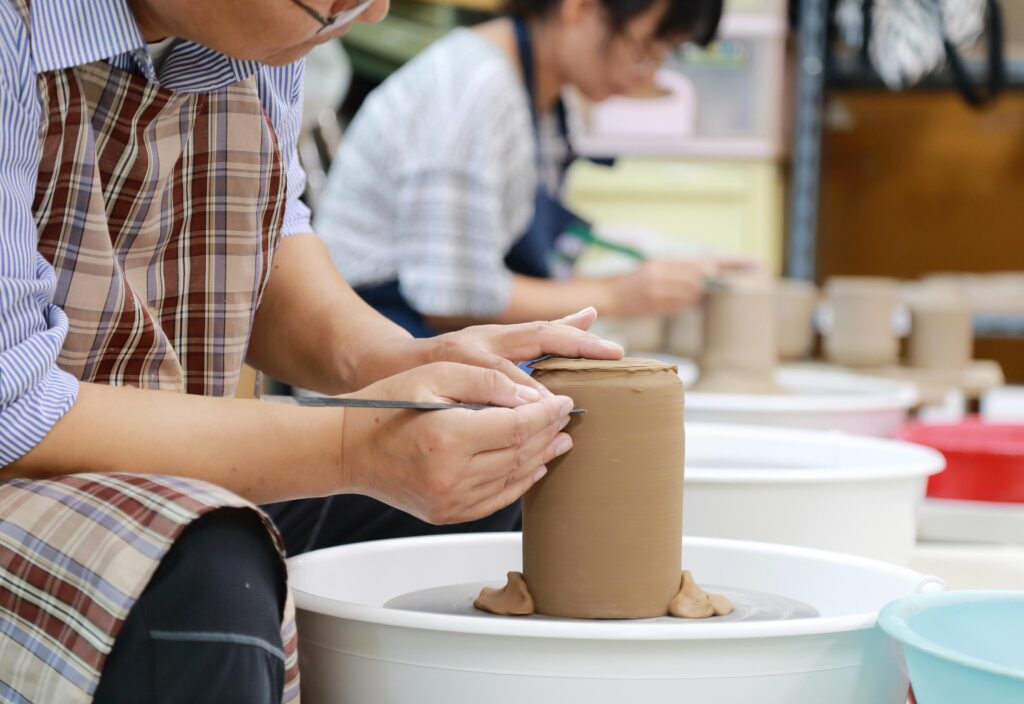
[Photo credit: Gyae Min/Pixabay]

Frank Lloyd Wright designed the Guggenheim Museum in 1943.  He was 76 years old. 

Galileo authored his final paper at age 74.

In the last four years of Picasso’s life—he lived until 91—he created more work than at any other comparable time. 

Maybe there’s something to the idea of creativity in older adulthood.  After all, it can be a time when mental energies can shift. “When you’re older, you’re off that treadmill, so you can free up some horsepower in the service of creativity,” said Robert Levenson, a psychologist at the University of California, Berkeley, in a Time article in 2013. 

Simple activities may assist with the added creative horsepower.  Daniel Levitan, author of Successful Aging, noted, “Interacting with the world also enhances creativity.”  These activities don’t have to be complicated.  Older adults permitted to walk around an outdoor landscape had higher scores on creativity assessments compared to those individuals that strolled around a rectangular path. 

A significant part of the “staying sharp” story is related to synaptic plasticity, the ability to create new brain connections.  Though affected by genetics, this plasticity is also linked with daily experiences and cultures.  Physical activity can be instrumental in plasticity, as can memory and general cognition.

Creativity also relates to learning, widely believed to be protective against cognitive decline.  People have some control over their brain health, noted Alan Gow, a psychology professor at Heriot-Watt University in Scotland.  “There are changes in lifestyle we can make at all stages of life that can affect cognition later in life,” he said in a Monitor on Psychology article earlier this year. 

Stimulating curiosity, an element of creative thinking, can be involved in learning for older adults.  In fact, state curiosity, marked by times when people experience something unfamiliar or new, can significantly increase in middle age and continue to grow in older adulthood.   

Creativity can also extend to finding purpose in life, according to Kerry Burnight, author of Joyspan.  She proposed three other categories of life purpose (financial, prosocial, and personal recognition), and, in regard to creativity, maintained that it can be beneficial in innovation, artistry, and problem-solving.     

Louise Aronson, a noted geriatrician and professor emeritus at the University of California at San Francisco, related that older adulthood is not necessarily an avenue for sole decline.  “Will you continue to age?  Yes. Will you die?  Without a doubt. But you can make it much better,” she said in a Washington Post article.

Creativity can be just one tool in that “better” toolbox. 

References

Burnight, K. (2025). Joyspan: The art and science of thriving in life’s second half.  Worthy Publishing. 

Kluger, J. (2013, September 23). How to live long.  Timehttps://content.time.com/time/subscriber/article/0,33009,2151786,00.html

Levitan, D. J. (2020).  Successful aging: A neuroscientist explores the power and potential of our lives. Dutton.

Penman, M. (2025, March 25). People 65 and older can get better with age, study shows.  This is the key.  Washington Post.   https://www.washingtonpost.com/lifestyle/2026/03/25/aging-positive-mindset/

Stringer, H. (April/May 2026).  How learning protects the aging brain.  Monitor on Psychology, pp. 46-55. https://www.apa.org/monitor/2026/04-05/learning-protects-aging-brain
Retirement success=E+R?

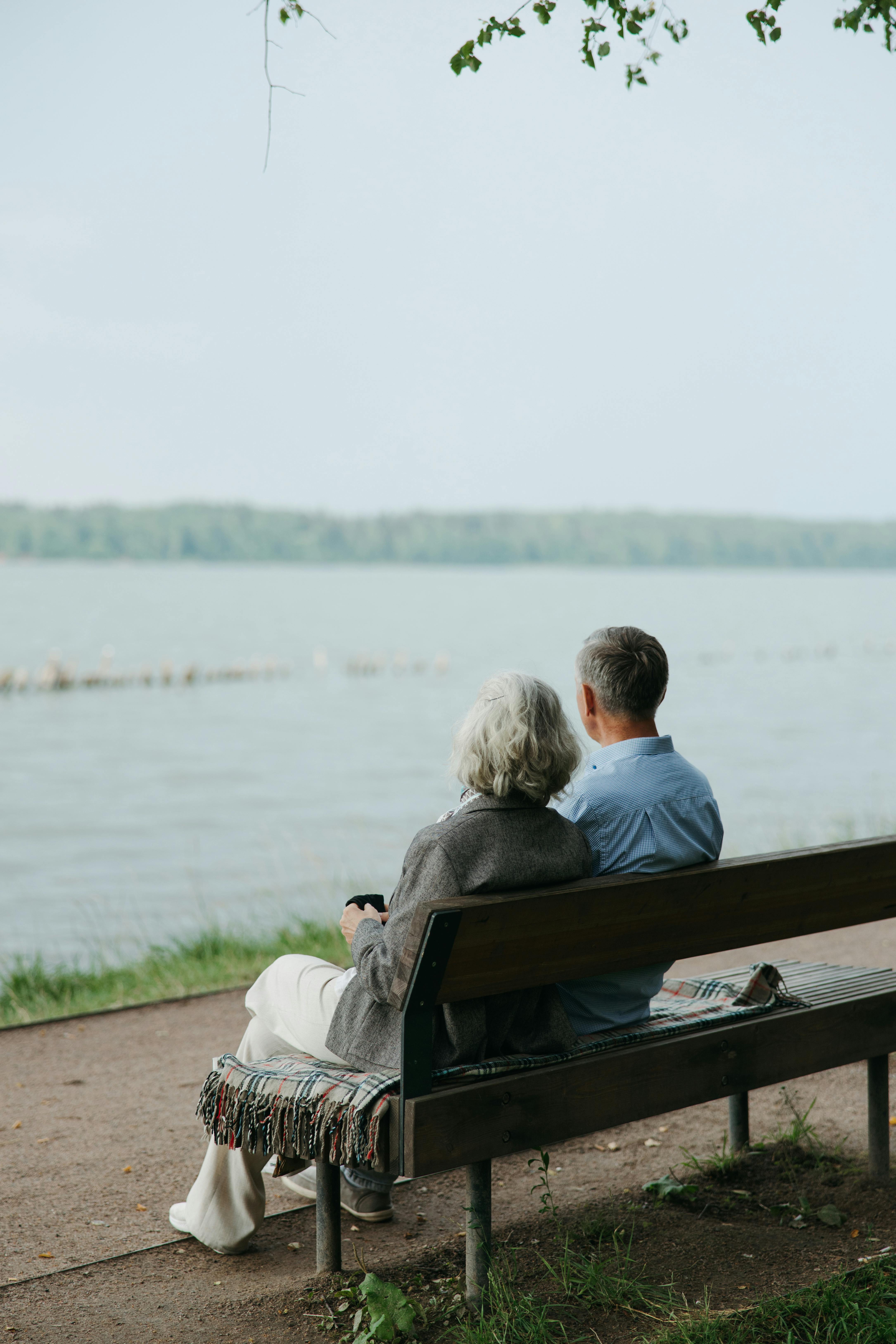
[Photo credit: Anastasia Shuraeva/Pexels]

I have witnessed many people move into retirement. Some situations were voluntary, others mandatory.  Some people flourished.  Others declined.  To better understand these differences, I frequently ask people, “What advice would you have for a successful retirement?” 

After all, retirement may not bode well for the brain.  Heightened risks for cognitive decline and depression can loom for some entering this life chapter (Ravindranath, 2025).  In the older adult population, those individuals who are retired face higher levels of depression (Dang et al., 2022). 

My conclusion at the moment: Successful retirement equals E+R.  That is, “exercise” plus “relationships.” Perhaps the two things can even go hand in hand.  It is a simplified formula, of course, and a preliminary thought about well-being at this juncture.

Exercise (“E”) represents one of the pillars of lifestyle psychiatry.  However, many people fall short of the CDC recommendations for physical activity.  The National Council on Aging related that less than one-third of older Americans meet the suggested mark in this category. 

Viswanathan (2024) outlined the advantages of exercise at any age, including the release of brain-derived neurotropic factor (BDNF), improved cognitive functioning, and an increased volume of the hippocampus.  It can also help with the reduction in the prevalence of depressive symptoms.

Another upside of exercise is its positive effect on chronic inflammation, which is a concern in both a cause and in signs of disease.  People with sedentary lifestyles tend to have higher levels of inflammation, and consistent movement often has beneficial effects (Friedman, 2025).

“R” (relationships), another pillar in lifestyle psychiatry, are equally important.  Beebe (2022) pointed to research finding that nearly 25% of people aged 65 or over are socially isolated.  “This circumstance,” she added, “is often terrible for your health, including your heart.”

The link to mental health and other areas of physical health is also clear.  Social isolation poses  health risks equal to smoking, hypertension, and obesity.  Social connections may even affect neurobiological circuitry in our brains and psychological resilience (Noordsy, Abbott-Frey, & Chawla, 2024).

Combining the “E” and “R” is one idea: Exercising with others could be a healthy option.  According to the National Council on Aging, some programs offered by community organizations have evidence-based benefits in health for older individuals. 

Another possibility—which holds for people of any age—is green space.  Walking in nature has multiple benefits from improved overall mental health and cognition to decreased mortality and cardiovascular disease, according to Peter James at the Harvard T.H. Chan School of Public Health (Moran, 2023). 

The hypothesis for this effect, James said, goes back to our roots: “We like being in nature because we are nature, we evolved in nature.  This is the setting we were meant to be in”  (Moran, 2023).    

Admittedly, the E+R equation is basic.  Other factors, such as diet, could be added, yet it seems to me that the exercise and relationship components are fundamental to success in retirement. 

References

Beebe, J. (2024, November 7). 10 worst habits for your heart.  AARP.  https://www.aarp.org/health/healthy-living/avoiding-unhealthy-heart-habits/

Dang, L., Ananthasubramaniam, A., & Mezuk, B. (2022). Spotlight on the challenges of depression following retirement and opportunities for interventions.  Clinical Interventions in Aging, 17, 1037–1056. doi: 10.2147/CIA.S336301

Friedman, D. (2025, March 19). Here’s one more reason to try to exercise. The New York Times. https://www.nytimes.com/2025/03/19/well/move/inflammation-exercise.html

Moran, M. (2023, November). Movement emerges to include green space as a social determinant of mental health.  Psychiatric News, pp. 16, 37.

National Council on Aging. (2023, December 1). Exercise programs that promote senior fitness. https://www.ncoa.org/article/exercise-programs-that-promote-senior-fitness/

Noordsy, D., Abbott-Frey, A., & Chawla, V. (2024, March). Lifestyle psychiatry emphasizes behaviors supporting mental health. Psychiatric News, 29-32.

Viswanathan, R. (2024, July 19).  Exercise is neuroplastic medicine.  Psychiatric News.  https://psychiatryonline.org/doi/full/10.1176/appi.pn.2024.08.8.45

Re-starting in late adulthood: A time for creative zest

Starting something—a diet, a workout regimen, or a new language—can be challenging.  Two steps forward, one step back.  Making mistakes, then making more mistakes, and sometimes not recognizing the progress made. 

Starting something later in life, such as after retirement, comes with its own challenges.  Yet, at the same time, it is a period filled with tremendous creative potential. 

In her book It’s Never Too Late to Begin Again, Julia Cameron makes precisely this point.  She started piano lessons at age 60, and, even after five years of practice, she still considered herself a beginner.  (She added that her piano teacher applauded her great progress over this time.)

Why might retirement—a stage when “free time” suddenly appears—be a time when creative ventures go unexplored?

Cameron pointed to one clear possibility: vulnerability.  After a work life and a family life full of achievements, the “beginning again” exposes people.  Following a rewarding young and middle adulthood, the ensuing stage of older adulthood may be one of hesitation in starting something anew. 

In Cameron’s words, “Often, when we say it is ‘too late’ for us to begin something, what we are really saying is that we aren’t willing to be a beginner” (p. 7).  After all, the words “novice” or “amateur” or “elementary” aren’t praiseworthy descriptors in older adulthood.

But not for everyone.

Consider Oh Yul Kwon, a professor emeritus at Griffith University in Australia who retired in 2013 and lives in Vancouver, BC.  Never an athletic type growing up, he started running at age 60 after an elbow injury sidelined him from tennis.  It was his daughter, a runner and triathlete herself, who then suggested running to him. At first the idea seemed a bit unusual.  In his mind, running was boring.  He recalled watching a colleague during a marathon and wondered, “Gee, how could people do that?”

Dr. Kwon ran his first marathon at age 68 in Brisbane, though he likely didn’t foresee where his “restart” would take him. 

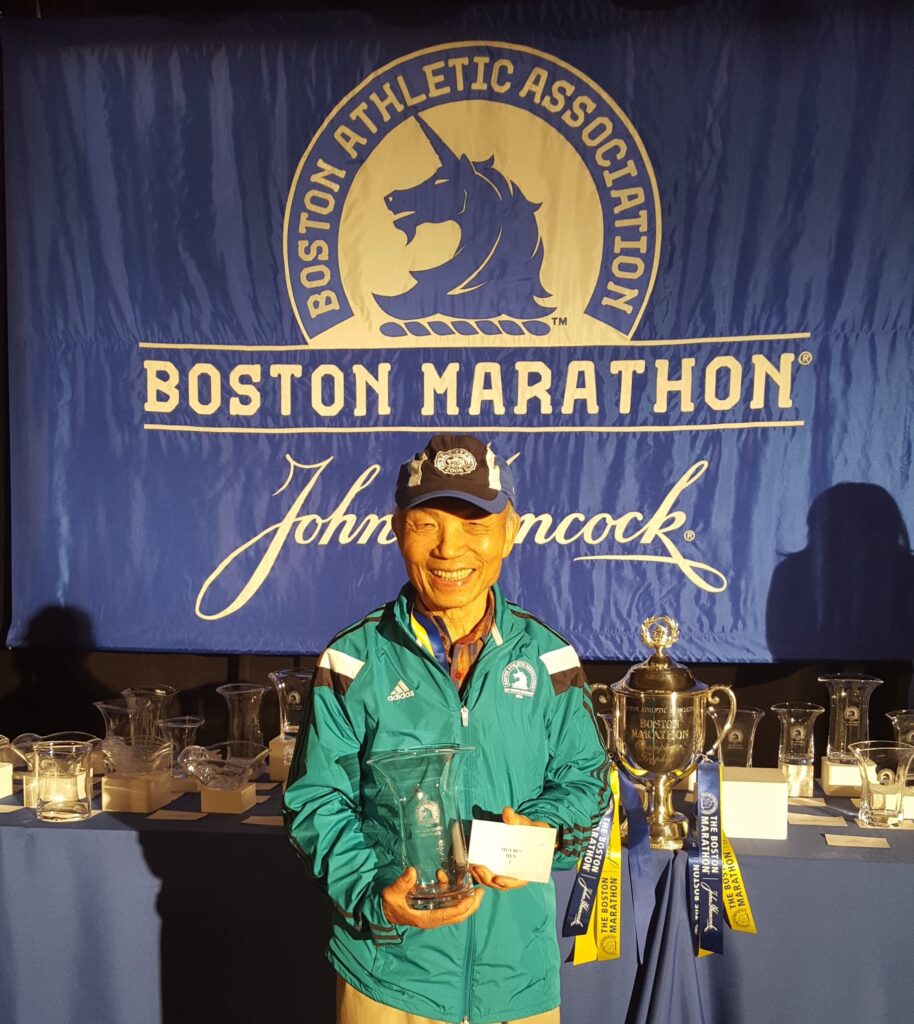
In 2016, a month after turning 80, he ran his second Boston Marathon.  He finished in 22,064th place.  Completing a marathon at any age is an accomplishment, but this came with a special amount of pride.  Shortly after crossing the finish line, his son told him that he had “won” the race, coming in first place in the men’s 80+ age group.

He credits his mental sharpness to running.  “When I run,” he told me, “I do a lot of mental exercise” that includes reciting poems and doing calculations. 

Dr. Kwon isn’t sure exactly many marathons he has run in his “restart.”  The number is somewhere over 30, and altogether he estimates having crossed over 100 finish lines since his running ventures began.

His most recent accomplishment was completing the 2024 Vancouver Half Marathon, an event featuring over 4500 runners. 

He has plans for another 13.1-mile race in Korea in the Fall.  “I will run until I collapse,” he told the CBC News in 2016.

Dr. Kwon’s running restart typifies Cameron’s notion of beginning again, even when, in this case, it started with one step.  As she wrote, “There is no such thing as a time that is ‘too late’ to begin a creative endeavor” (p. 111). 

Photo credit: Oh Yul Kwon

References:

Cameron, J., & Lively, E. (2016). It’s never too late to begin again: Discovering creativity and meaning at midlife and beyond.  TarcherPerigee.    

Fisher, G. (2016, April 30).  80-year-old Boston Marathon champ from B.C. aims big for BMO Vancouver Marathon.  CBC News.  https://www.cbc.ca/news/canada/british-columbia/80-year-old-boston-marathon-champ-from-b-c-aims-big-for-bmo-vancouver-marathon-1.3560887