
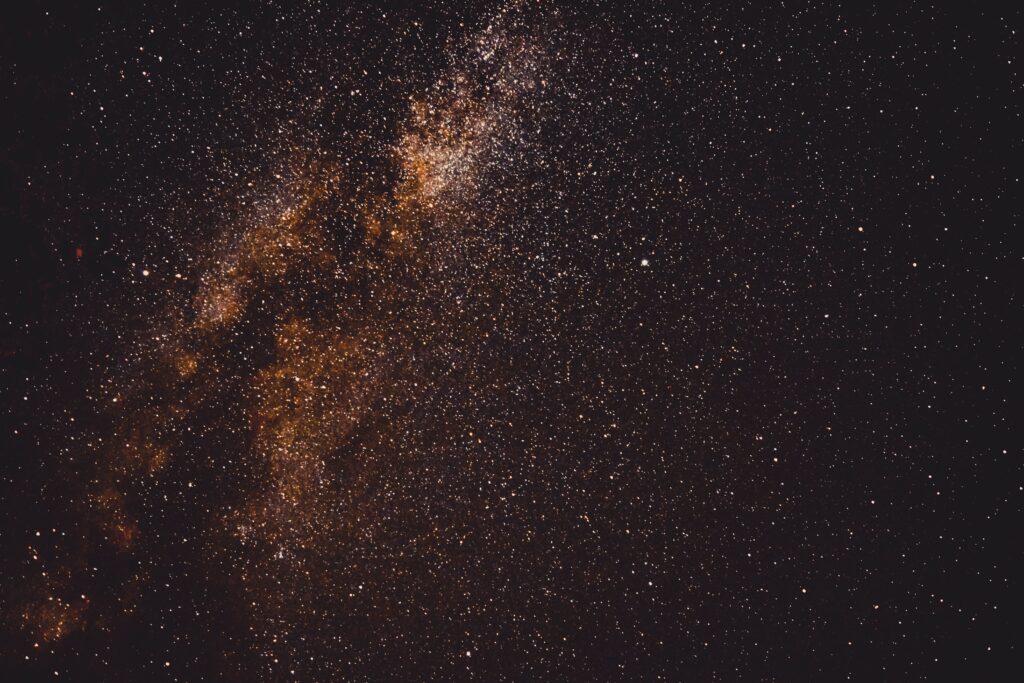
[Photo: Delcho Dichev/Pexels]
Diane Turnshek has been tackling Edison’s innovation.
She wants to dim lights, but only after dark.
As an educator and advocate, Turnshek wears multiple hats: a special lecturer in the Department of Physics at Carnegie Mellon University and an adjunct assistant professor in the Department of Physics and Astronomy at the University of Pittsburgh. She gives about 50 talks a year in the Pittsburgh (PA)region and is often recognized as “that star lady.”
Turnshek has campaigned for more people to peer at the nighttime sky, a campaign that has consumed thousands of her hours since 2013. “I want people to look up,” she said in opening a recent talk at a local brewery.
The problem, however, is their view: Nighttime light often prevents stargazing.
Her career path started at age 7 when she watched the nighttime skies from her home in East Hartford, CT. “It was the wonder of the night sky that always intrigued me,” Turnshek said. “When I was little, you’d just go outside any building and there was the Milky Way.”
That’s no longer the case for many people in the US.
Given increasing nighttime light pollution, the mere ability to see outer space is a challenge. According to research cited by the US National Park Service, the problem is escalating globally. The average night sky brightened by 9.6 percent from 2011 to 2022, equating to the sky doubling in brightness every eight years.
According to the world atlas of artificial sky luminance, nearly 80 percent of the North American population is unable to see the Milky Way (Falchi et al., 2016). An assignment in Turnshek’s summer class, “Skyglow,” requires students to find and interview someone that has seen the Milky Way at some point in life. (“One third of the class came back to me and said they couldn’t find anyone,” Turnshek commented.)
Light pollution can also have detrimental effects on people and animals. In addition to potentially disrupting individuals’ circadian rhythms, it can adversely affect animals’ feeding and reproductive behavior. Because artificial light attracts birds, those in flight or migration can be thrown off course or inadvertently fly into brightened buildings. Nighttime urban light may also alter birds’ natural signals, prompting them to migrate at earlier or later dates than usual.
Turnshek’s community talks include the efforts of DarkSky International, a global advocacy group attempting to protect the night sky through education and community science. The organization offers five principles dedicated to responsible outdoor lighting that call for, in part, the use of light only when needed and of warmer colored lights when possible.
Turnshek’s advocacy started as a new Pittsburgh mayor prepared to take office in 2014. During a transition team meeting, she was the lone person to raise the issue of darker skies. The City subsequently asked Turnshek to spearhead community education efforts on the issue, and she later successfully lobbied for the city to adopt ordinances in line with the recommendations of DarkSky International.
Her advocacy with city officials continued in the conversion of nearly 37,000 streetlights to LED bulbs that were dimmable and more energy-efficient, another move toward bringing darker skies to Pittsburgh nights.
Turnshek continues to examine the outcome of her efforts, courtesy of some photos that came from the International Space Station.
Such photos are critical in her work. Turnshek was part of a 2023 European documentary on light pollution where she found herself hanging out the door of a helicopter on a frigid February night, snapping pictures of downtown Pittsburgh and other sites in the city.
“It’s a wow factor. You look at those pictures and you’re like, ‘why are all those lights on?’ Why don’t they dim them? Why do you waste all of that electricity? Once you see bad lighting, it’s really hard to unsee it after that,” she said.
Her monthly newsletter has gained over 1300 followers, and she hopes that her efforts “put a bite in climate disruption” and add cost savings in misused electricity.
Turnshek is hopeful about her efforts when seeing the number of speaking requests that she receives. “If that many people want me to talk to them, then something must be happening,” she said.
Edison first displayed his transformational lighting system in 1879, and now, nearly 150 years later, Turnshek seeks a different view. “I want people to be able to look and have that wonder and awe that we’ve had the entire time humans have been around, except for the last hundred years,” she said.
What would Turnshek say to Edison? “Great innovation,” she reflected. “Too far ahead of its time. The culture is going to have a hard time coming to terms with this invention.”
“That star lady” and her advocacy will continue to shine the light on darkness.
Reference:
Fabio, F., et al. (2016). The new world atlas of artificial night sky brightness. Science Advances, 2(6). DOI:10.1126/sciadv.1600377